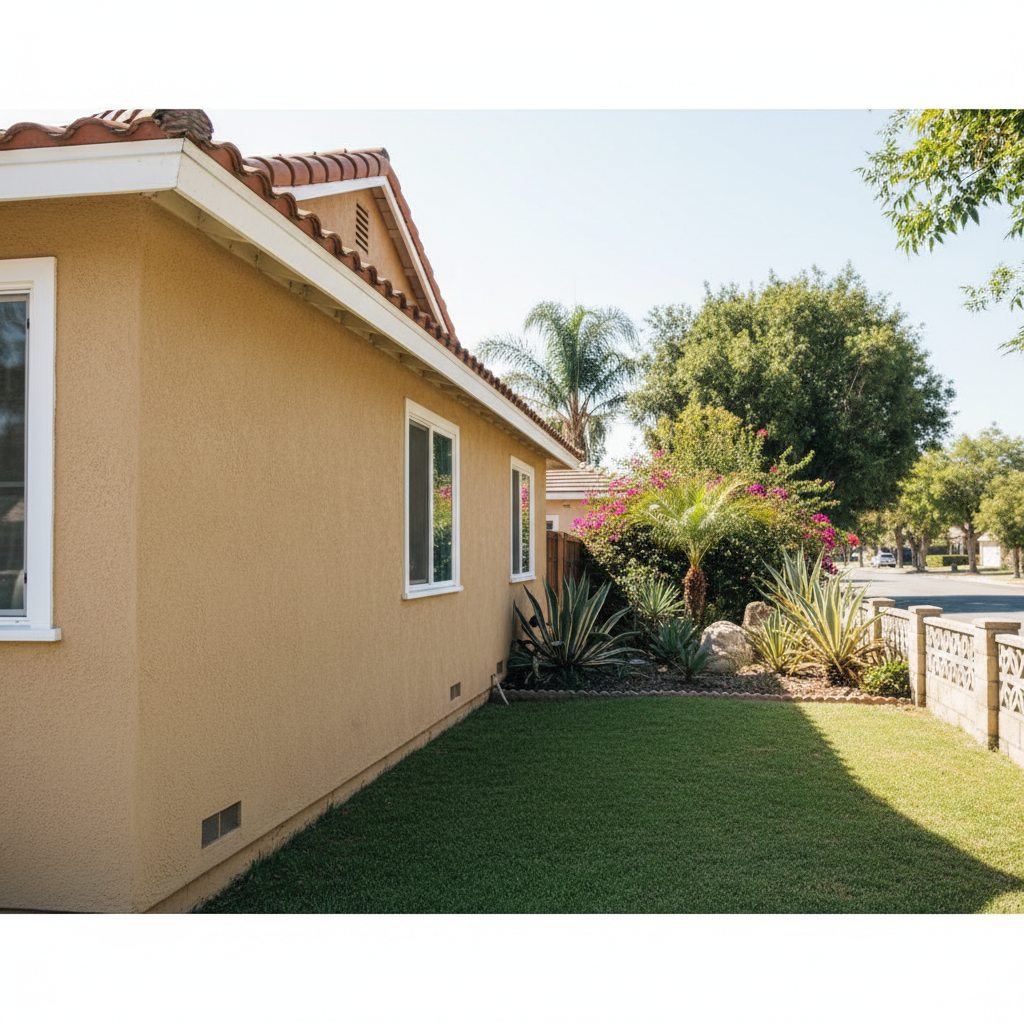
Think stucco is bulletproof? It's tough, no doubt, but even the best stucco job needs a little love to really go the distance. I've been working with stucco here in Garden Grove for years, and I've seen firsthand what happens when folks ignore their exterior. You've invested good money in your home's curb appeal and protection; let's make sure it lasts.
Extending Your Stucco's Lifespan
It's not rocket science, but a few simple habits can add years to your stucco. First off, keep it clean. Our dry, dusty climate here in Southern California means dirt and grime build up. A gentle wash with a garden hose and a soft brush can do wonders. Don't go blasting it with a high-pressure washer unless you know what you're doing; you can actually damage the finish and force water into places it shouldn't be. Just plain old water and maybe a mild detergent for stubborn spots. Do this once or twice a year, especially after those Santa Ana winds kick up a fuss.
Next, keep an eye on your landscaping. Plants growing directly against your stucco are a big no-no. They hold moisture against the wall, which is an open invitation for trouble. Trim back bushes, vines, and trees so there's always a few inches of air circulation between the foliage and your house. Also, make sure your sprinklers aren't constantly drenching your stucco. That constant wetting and drying cycle can weaken the material over time and lead to algae or mildew growth.
Finally, consider a good quality elastomeric paint every 10-15 years. This isn't just for looks; it adds an extra layer of protection against moisture penetration and minor cracking. It's like a raincoat for your house. Just make sure it's applied correctly to a clean, prepped surface. That's where a pro like us at Garden Grove Stucco & Plastering comes in handy.
Regular Maintenance Checks: What to Look For
You don't need to be a stucco expert to spot potential problems. Just take a walk around your house every few months, especially after heavy rain or strong winds. Here's what I tell my clients to keep an eye on:
- Cracks: Small hairline cracks are often just surface-level and not a huge deal. But if you see cracks that are wider than a credit card, or if they're running horizontally or in a stair-step pattern, that's a red flag. Those can indicate structural movement or water intrusion.
- Discoloration or Stains: Dark streaks, green patches, or white powdery residue (efflorescence) usually mean moisture is present. Green or black spots are often mildew or algae. White powder means salts are leaching out of the stucco as water evaporates.
- Bulging or Soft Spots: Press gently on your stucco in a few places. If it feels soft, spongy, or you see areas that are bulging out, that's a serious sign of water damage behind the stucco. This needs immediate attention.
- Pest Activity: Keep an eye out for holes or tunnels. Termites love damp wood, and if water is getting behind your stucco, you might find them making themselves at home. Birds and rodents can also peck or chew at weakened areas.
- Flashing and Sealants: Check around windows, doors, and rooflines. The flashing and caulk here are critical for keeping water out. If they're cracked, missing, or pulling away, water will find a way in.
When to Call a Professional
Look, some things you can handle yourself, like a good wash. But for anything more serious, you really need to bring in someone who knows stucco. If you spot any of those warning signs I just mentioned – especially wider cracks, soft spots, or persistent staining – don't put it off. Water intrusion behind stucco can lead to wood rot, mold, and even structural damage that costs a fortune to fix down the line.
Here in Garden Grove, we get our share of rain, even if it's not constant. When it does come, it can be heavy. If your stucco isn't properly sealed or has compromised areas, that water will find its way in. Don't wait until you see water stains inside your house. By then, the damage is usually extensive.
A professional can properly diagnose the issue, determine the extent of the damage, and make the right repairs. We've got the tools and the know-how to patch cracks, re-stucco damaged sections, and apply proper sealants to ensure your home is protected. Investing in timely repairs now will save you a massive headache and a bigger bill later. It's just smart homeownership.